Description
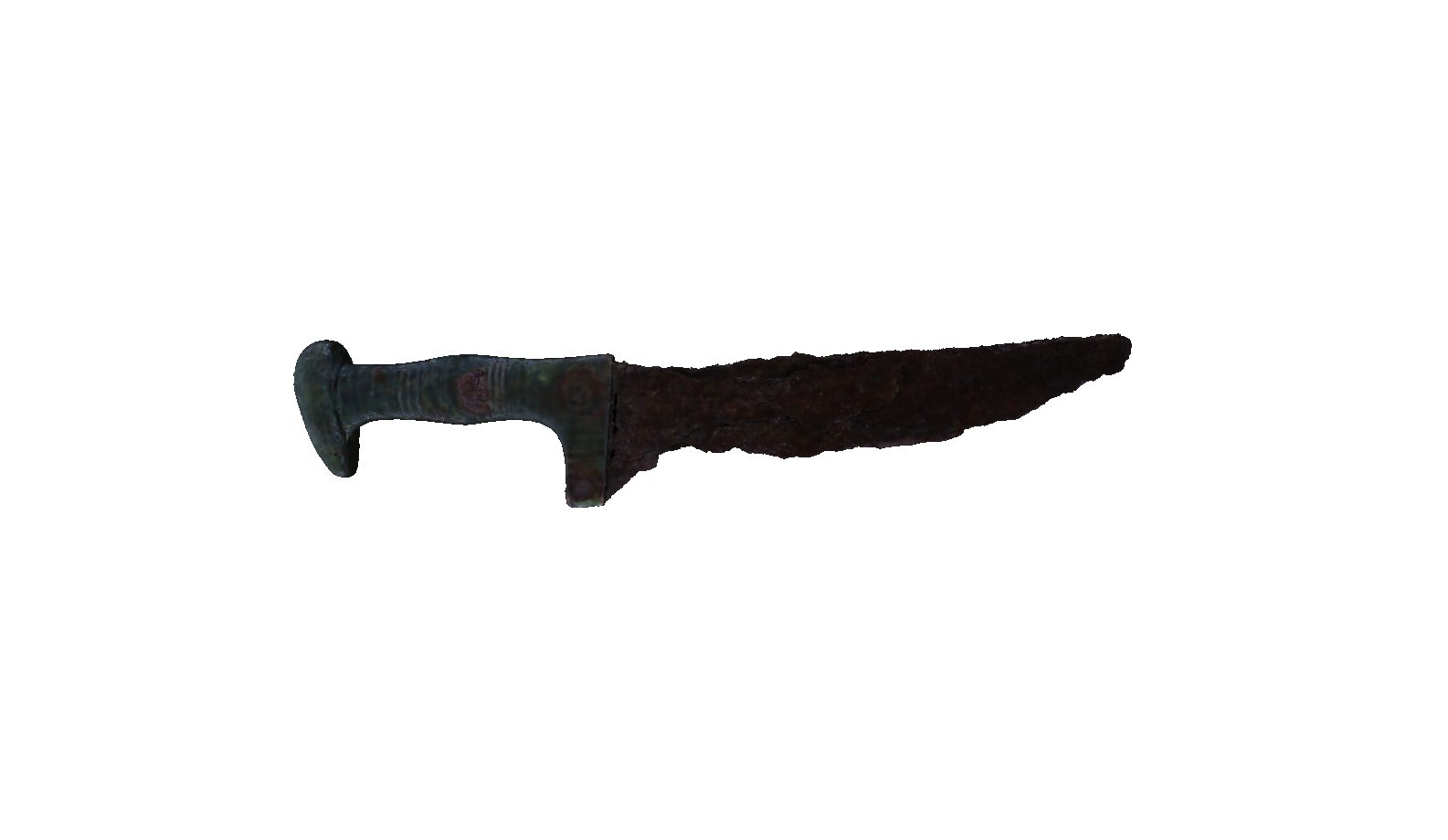
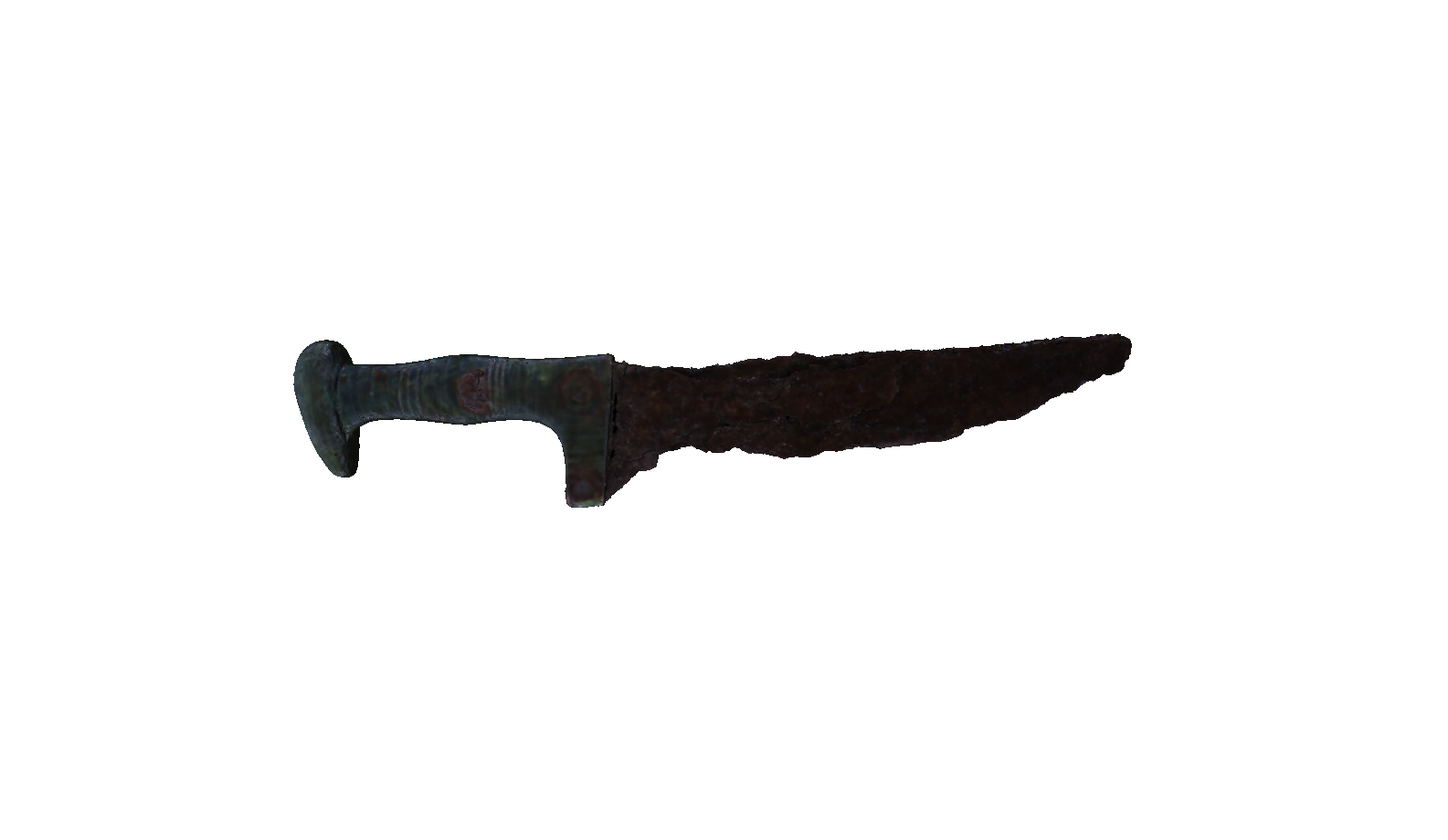
This object is part of a venetic grave goods from the 5th century BC. belonging to a tomb named T9 (the numbers are sequential, following the order of discovery) found in 1911 in alley I San Massimo, in Padua, about 55 cm below the current level of trampling. The area was the site of an important necropolis in ancient times and there are many identified burials, although not all of them have complete grave goods: T9 itself is missing of some pieces that must surely have been there originally - such as the ossuary vase - and this is due to reworkings undergone by this context over time.
The knife an iron blade, rather oxidized, with a straight back, joined to a bronze handle thanks to two nails. The type refers to the metalworking of Certosa, Bologna, and thus to the culture of Northern Etruria, with which the Patavian world must have had close relations.
What makes this find interesting is the material in which it is made: it is a polymateric object composed by bronze and iron. While bronze is relatively easy to modelling and therefore is frequently found in antiquity, iron requires more complex workmanship, starting with the raw material and ending with skilled labor. Before the modern period, furnaces could not reach the melting temperature of iron (1536° C) and could only heat it, so it was necessary to know how to work it by beating it (hence "wrought iron"). During the 5th century B.C., this technical knowledge was in its prime and for this reason iron was still an extremely valuable and rare material.